




Most businesses know what their hardware costs to buy. Very few know what it costs to run, maintain and replace. The gap between those two numbers is where lifecycle strategies are won or lost.
The problem with buying hardware like it’s a once-off decision
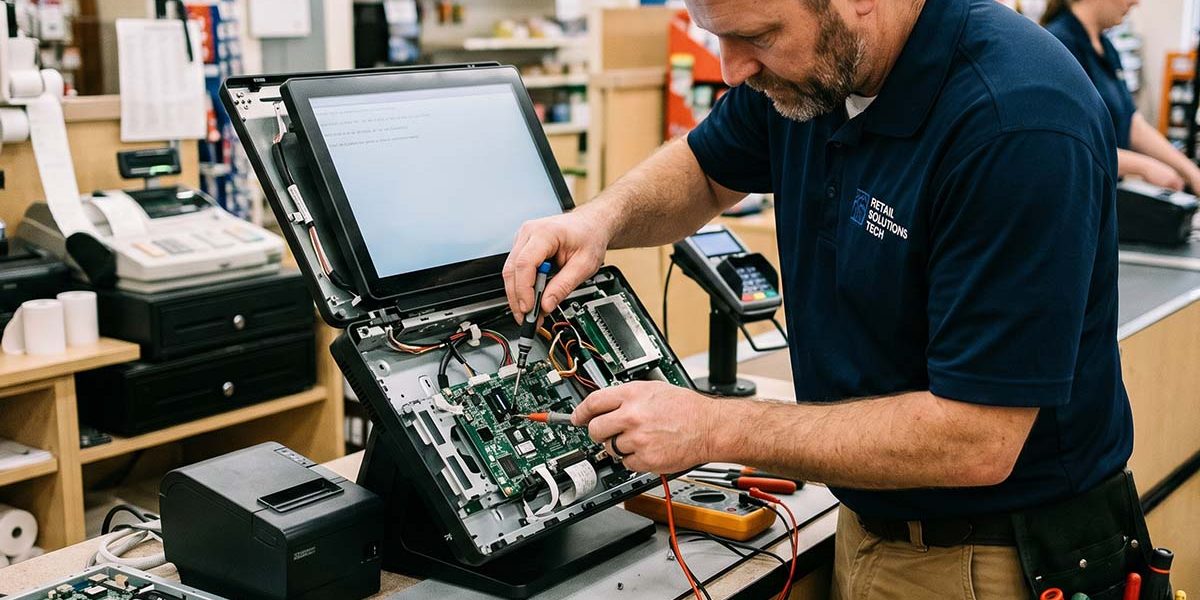
There’s a common pattern we see in businesses that haven’t thought through their device lifecycle strategy. They buy hardware. The hardware works well for a couple of years. Then things start going wrong — a unit fails here, a spare part becomes unavailable there, a software update stops being supported on an older OS. The business starts managing hardware reactively, firefighting instead of planning, and the cost of downtime starts to dwarf the original cost of the equipment.
This isn’t an edge case. It’s the default outcome for businesses that treat hardware as a capital purchase rather than a managed asset. And in environments where device uptime is directly tied to revenue — retail, fast food, gaming, fintech — the financial consequences are significant.
“The most expensive device in your fleet isn’t the one that cost the most. It’s the one that failed at 17:00 on a Friday with no spare part available.”
Understanding the true total cost of ownership
When most businesses calculate the cost of their device fleet, they account for the purchase price. Sometimes they factor in a warranty. Rarely do they fully account for the total cost of ownership (TCO) — which includes repair costs, downtime losses, expedited logistics, staff time spent managing failures, and the eventual cost of unplanned replacement cycles.
-
150–300% More expensive — emergency repairs vs identical planned maintenance work
-
82% Of companies have experienced unplanned downtime in the past 3 years
-
3–5 Yrs Recommended POS hardware lifecycle — devices pushed beyond this window see significantly higher failure rates.
A well-constructed device lifecycle strategy changes this equation entirely. It doesn’t eliminate failures — hardware will always fail eventually — but it ensures that when failure happens, the response is planned, fast and cost-controlled.
What a proper lifecycle strategy covers
A device lifecycle strategy is not just a warranty document. It’s a comprehensive plan that covers every phase of a device’s life in your business:
- Procurement planning — buying the right product for your application and ensuring local stock availability for rollout and replacement.
- Warranty and insurance — extended warranty options (up to seven years with Tactile’s Resilient Retail 9), and all-in insurance covering faults, theft, accidental damage and environmental damage.
- Spare parts management — guaranteed parts availability for a defined period, so you’re not stranded when a unit needs repair.
- Remote device management — proactive monitoring via MDM platforms to catch issues before they become failures.
- End-of-life migration planning — knowing well in advance when a product family is approaching end-of-life, and having a migration path ready before it becomes urgent.
The VAS difference
Value Added Services (VAS) is the layer of ongoing support that turns a hardware purchase into a managed partnership. At Tactile Technologies, our VAS offering is deliberately flexible — because no two businesses have the same uptime requirements, the same geographic footprint, or the same risk tolerance.
We offer custom SLAs that are built around your operational reality. If you run 200 POS terminals across a national retail chain, your SLA looks very different from a hospitality group running 20 kiosks in three hotels. We design the agreement around your business, not around what’s easiest for us to deliver.
Our local service centres in Johannesburg, Cape Town and Durban mean that repair turnaround is measured in days, not weeks. And our remote device management capability means we’re often aware of a potential failure before you are.
“A device lifecycle strategy is not a cost. It’s insurance against the costs you don’t see coming — until they arrive all at once.”
Start the conversation now, not when something breaks
The best time to put a device lifecycle strategy in place is before you need it. If you’re currently running a device fleet without a formal lifecycle plan — no structured warranty coverage, no spare parts agreement, no end-of-life roadmap — you are carrying more risk than your business needs to.
Tactile Technologies has been helping South African businesses manage their hardware lifecycle for 25 years. We know where the risks are, we know how to mitigate them, and we know how to build a VAS package that fits your budget and your operational requirements. Let’s talk before the next failure, not after it.
SEO Keywords: device lifecycle management South Africa, hardware lifecycle strategy, total cost of ownership POS, VAS technology provider SA, managed device services, POS warranty management, hardware end-of-life planning